
Prediction-based gaming has become increasingly popular among online players because of its simplicity, speed, and excitement. However, while these games seem straightforward, many players unknowingly fall into psychological traps in prediction games that affect their decision-making. These traps can lead to impulsive choices, emotional betting, and inconsistent strategies. To effectively bypass these mental hurdles, players must transition from emotional play to algorithmic thinking. Establishing a “pre-flight checklist” before every session is the most effective deterrent; this includes setting hard “stop-loss” and “take-profit” limits that are non-negotiable. By defining your exit points before the adrenaline of the game kicks in, you remove the need to make high-pressure decisions when your judgment might be clouded by recent results. At Jalwa Game, we believe that understanding player psychology is just as important as understanding game mechanics.
Learning how to avoid prediction games psychological traps can help players stay focused, make better predictions, and maintain a more controlled gaming experience. In this guide, we will explore the most common mistakes in prediction games, discuss the role of psychological bias in gaming decisions, and share practical tips to stay rational while predicting. Furthermore, maintaining a detailed gaming journal can expose the invisible patterns in your own behavior. Documenting not just the outcomes, but the reasoning behind each prediction, allows you to identify when you are acting on a “hunch” rather than a strategy. Over time, this data-driven self-awareness acts as a psychological shield, helping you recognize the early signs of “tilt” or overconfidence. When you treat every prediction as a single data point in a long-term plan, the emotional weight of individual rounds diminishes, allowing for a more disciplined and sustainable approach.
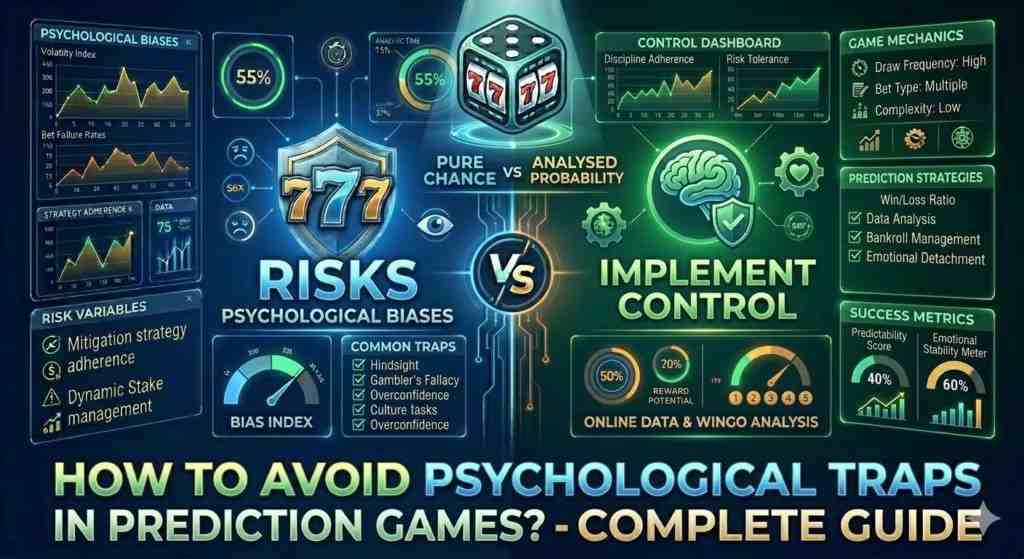
Understanding Psychological Traps In Prediction Games
Before improving your gameplay, it is important to recognize what psychological traps in prediction games actually are. These traps occur when emotions, assumptions, or biases influence your predictions instead of logic or strategy. Many players believe that past outcomes guarantee future results, which is one of the most common misconceptions. This belief often leads to impulsive decisions and repeated losses. Understanding these patterns is essential if you want to avoid psychological traps in prediction games and develop a disciplined approach. Another issue arises when players chase losses instead of analyzing their strategies. This is one of the common mistakes in prediction games that leads to emotional gameplay rather than logical decision-making.
The Role Of Psychological Bias In Gaming Decisions
Human psychology naturally influences the way people interpret patterns and probabilities. In prediction-based games, psychological bias in gaming decisions often causes players to misjudge outcomes or overestimate their chances of winning. For example, players may believe they are “due for a win” after several losses. This belief is a classic example of psychological traps in prediction games. While patterns may seem meaningful, prediction games usually involve randomness, making such assumptions unreliable. Recognizing psychological bias in gaming decisions is one of the most effective ways to avoid psychological traps in prediction games. Once players become aware of these biases, they can focus on maintaining consistency and discipline during gameplay. To ensure you are installing the official and most secure version of the APK, always follow the latest jalwa game app download guide available on the website.
Common Mistakes In Prediction Games
Many players struggle because they repeatedly fall into common mistakes in prediction games without realizing it. These mistakes often stem from emotional reactions rather than rational thinking. One of the most frequent common mistakes in prediction games is overconfidence. After a few successful predictions, players may increase their bets without proper planning. Another mistake is chasing losses, which happens when players try to recover previous losses by making riskier predictions. These behaviors are classic examples of psychological traps in prediction games, and they can quickly disrupt a player’s strategy. To maintain consistency, players must learn how to avoid psychological traps in prediction games and focus on calculated decisions.
Tips To Stay Rational While Predicting
Maintaining a rational mindset is crucial for anyone participating in prediction games. Following effective tips to stay rational while predicting can help players maintain control and avoid impulsive decisions. First, set a clear budget before starting a session. This ensures that emotions do not influence your gameplay. One of the most important tips to stay rational while predicting is to treat each round as an independent event rather than assuming patterns. Another helpful strategy is to take breaks between sessions. Continuous gameplay can lead to fatigue, which increases the likelihood of falling into psychological traps in prediction games. Players who consistently apply tips to stay rational while predicting often maintain better control over their decisions and avoid the emotional cycles that lead to losses. If you are adding funds to your wallet for the first time, make sure to read the jalwa game recharge guide to learn how to correctly submit your UTR for verification.
How To Make Better Choices In Prediction Games?
Learning how to make better choices in prediction games requires a combination of awareness, strategy, and discipline. Players who approach prediction games with a structured mindset often enjoy a more balanced gaming experience. The first step in understanding how to make better choices in prediction games is recognizing the influence of emotions. Decisions driven by frustration or excitement often lead to poor outcomes. Another important factor is analyzing gameplay patterns without assuming certainty. While observing trends can be useful, relying entirely on perceived patterns may lead to psychological traps in prediction games. By focusing on logic rather than emotion, players can gradually improve their understanding of how to make better choices in prediction games and maintain a consistent strategy.
Strategies To Avoid Psychological Traps In Prediction Games
Developing a strategy is one of the most reliable ways to avoid psychological traps in prediction games. Strategic thinking allows players to stay focused on long-term gameplay rather than reacting to individual outcomes. A useful approach is to track previous predictions and analyze them objectively. This method helps players identify patterns in their own behavior and avoid repeating common mistakes in prediction games. Another strategy involves setting clear goals for each session. By defining limits and objectives, players can reduce the influence of psychological bias in gaming decisions. Players who actively work to avoid prediction games psychological traps often experience a more balanced and enjoyable gaming journey. For those experiencing “Invalid Password” or connectivity errors, following these simple tips to jalwa goa game login can help you regain access to your dashboard.
The Importance Of Discipline In Prediction Gaming
Discipline plays a critical role in overcoming prediction games psychological traps. Without discipline, even the best strategies can fail due to emotional decision-making. Maintaining discipline means following a consistent plan, regardless of whether you are winning or losing. Many players fall into common mistakes in prediction games because they abandon their strategies during emotional moments. Using structured tips to stay rational while predicting can help reinforce discipline. These practices ensure that players remain calm, focused, and strategic throughout their gaming sessions. Ultimately, discipline is one of the most effective ways to avoid prediction games psychological traps and improve overall decision-making.
Why Psychological Awareness Matters In Prediction Gaming?
Understanding player behavior is essential for anyone involved in prediction-based gaming. Many players unknowingly fall into prediction games psychological traps, which can influence their decisions and reduce the effectiveness of their strategies. These traps usually arise from emotional reactions, overconfidence, or assumptions about patterns that may not actually exist. To avoid prediction games psychological traps, players must first recognize how emotions influence their actions during gameplay. When players become overly confident after a win or frustrated after a loss, they may make impulsive predictions that do not follow their original strategy. Awareness of psychological bias in gaming decisions is particularly important because it helps players understand why they sometimes misinterpret results or believe certain patterns will continue indefinitely. Recognizing these mental tendencies is the first step toward maintaining a disciplined and rational approach to prediction gaming. If you are a new player, simply navigate to the signup page and provide your mobile number to register new account and begin participating in the live draws.
Recognizing Patterns Without Falling Into Mental Traps
One of the most common reasons players struggle in prediction games is their tendency to rely too heavily on perceived patterns. While observing results can be useful, assuming that past outcomes guarantee future results often leads to prediction games psychological traps. Many players make assumptions based on short-term trends, which can lead to common mistakes in prediction games. For example, after observing a certain pattern, a player might believe the next outcome is predictable with certainty. However, prediction games usually involve elements of randomness, making such assumptions risky. To counter this issue, players should focus on tips to stay rational while predicting, such as evaluating outcomes objectively and avoiding emotional reactions to short-term results. By maintaining a balanced mindset, players can observe patterns without falling into the mental traps that often disrupt decision-making.
Building A Strategic Approach To Prediction Games
Developing a clear strategy is essential for players who want to avoid inconsistent gameplay. Without a structured approach, it becomes easy to fall into prediction games psychological traps, especially during long gaming sessions. Players who want to avoid prediction games psychological traps should focus on planning their predictions rather than reacting impulsively to each outcome. This means setting limits, tracking results, and evaluating decisions based on logic rather than emotion. Another important factor is learning how to make better choices in prediction games by analyzing personal gameplay patterns. When players review their previous predictions, they can identify mistakes and adjust their strategies accordingly. This practice helps players refine their approach and maintain consistency in their decision-making.
Managing Emotions During Prediction Gameplay
Emotions play a major role in gaming decisions. Excitement, frustration, and overconfidence can all influence predictions, often leading players into prediction games psychological traps. Managing emotions is therefore one of the most important aspects of responsible gameplay. Many of the prediction games common mistakes occur when players react emotionally to wins or losses. For instance, after a losing streak, a player may increase their predictions in an attempt to recover quickly. This reaction is often driven by frustration rather than strategy. Applying practical tips to stay rational while predicting can help prevent these situations. Taking breaks, setting limits, and focusing on long-term strategies allow players to maintain a calm and balanced mindset throughout their gaming sessions.
Understanding The Impact Of Cognitive Bias
Human psychology naturally includes cognitive biases that affect how people interpret information. In prediction games, psychological bias in gaming decisions can cause players to believe they have identified patterns even when outcomes are random. For example, players may assume that a specific result is “due” to appear after several different outcomes. This belief is one of the most common prediction games psychological traps, as it creates a false sense of predictability. Learning how to make better choices in prediction games requires recognizing these biases and adjusting decision-making accordingly. When players understand that randomness is a natural part of prediction games, they are less likely to rely on assumptions that could lead to poor decisions.
Developing Long-Term Discipline In Prediction Games
Discipline is one of the most valuable traits for anyone participating in prediction games. Without discipline, even experienced players can fall into prediction games psychological traps that disrupt their strategies. A disciplined approach involves sticking to a consistent plan regardless of short-term results. This mindset allows players to maintain control over their decisions rather than reacting emotionally to each outcome. Players who focus on strategy and awareness are more likely to recognize psychological bias in gaming decisions and adjust their behavior accordingly. By combining discipline with thoughtful analysis, gamers can gradually strengthen their ability to make rational predictions. In the long run, maintaining discipline and focusing on logical strategies can significantly improve a player’s understanding of prediction games. When players remain calm, strategic, and aware of their mental habits, they are far better equipped to navigate the challenges that often arise from prediction games psychological traps.
Understanding Psychological Traps In Prediction Games
Many players enjoy prediction-based games because of their fast pace and exciting outcomes. However, one of the biggest challenges players face is falling into prediction games psychological traps. These mental patterns can influence decisions and lead to inconsistent gameplay. Recognizing psychological traps in prediction games early helps players maintain a balanced approach and focus on logical thinking instead of emotional reactions. One of the most prevalent traps is the “Gambler’s Fallacy,” the mistaken belief that past outcomes influence future probability in independent events. For instance, if a specific result has appeared several times in a row, players often feel a “correction” is due, leading to impulsive, high-stakes decisions. Similarly, “Loss Aversion” can trigger a frantic desire to recoup losses immediately, often resulting in “revenge gaming” where logic is replaced by desperation. By identifying these cognitive biases, you can implement a disciplined strategy, setting strict limits on playtime and budget to ensure that your decisions remain grounded in data rather than temporary emotional shifts.
Why Players Experience Psychological Traps?
One reason prediction games psychological traps occur is because players often rely on perceived patterns or recent outcomes to make predictions. This behavior can lead to impulsive choices that do not follow a clear strategy. Learning to avoid prediction games psychological traps requires discipline, patience, and awareness of how emotions affect decisions. At the core of these traps is the brain’s natural tendency toward pattern recognition. Humans are evolutionarily wired to find order in chaos, a trait that often backfires in environments governed by probability. When a player sees a sequence of results, the brain’s reward system releases dopamine in anticipation of “cracking the code,” creating a false sense of certainty. This is compounded by Availability Bias, where players give undue weight to their most recent wins or “near-misses,” leading them to ignore long-term statistical realities. When the emotional high of a potential win overrides logical risk assessment, the resulting “tunnel vision” makes it difficult to walk away. Breaking this cycle requires shifting from a reactive mindset to a systematic one, where every move is dictated by pre-set rules rather than the persuasive, but often misleading, narrative of a “winning streak.”
Frequently Asked Questions
1. What are psychological traps in prediction games?
Psychological traps in prediction games refer to mental biases or emotional reactions that influence predictions and lead to irrational decisions during gameplay.
2. How can players avoid psychological traps in prediction games?
Players can avoid psychological traps in prediction games by setting budgets, tracking predictions, staying disciplined, and focusing on logical decision-making rather than emotions.
3. What are the most common mistakes in prediction games?
Some of the common mistakes in prediction games include chasing losses, overconfidence after wins, ignoring strategies, and making impulsive predictions.
4. Why does psychological bias affect gaming decisions?
Psychological bias in gaming decisions occurs because players naturally try to interpret patterns or believe certain outcomes are more likely based on past results.
5. How can players make better choices in prediction games?
Understanding how to make better choices in prediction games involves maintaining discipline, avoiding emotional decisions, and applying practical strategies consistently.